
3D & Spatial · 02 of 04
Make scale understandable
Use consistent scene units and recognisable context when size matters.
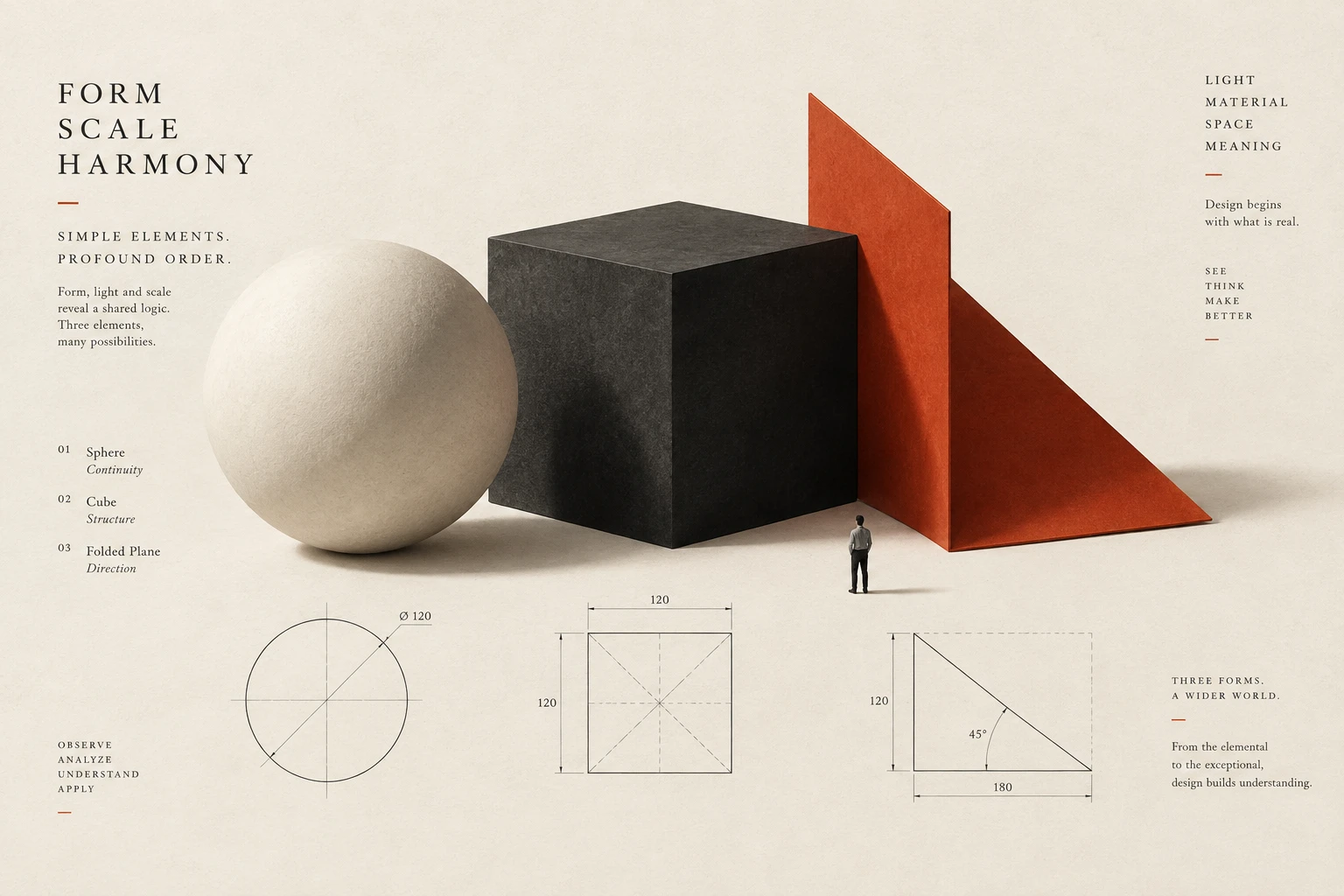
The idea
An isolated object can be difficult to judge in size.
A familiar neighbour, a dimension label or a view of the object in use can provide context. Choose the reference that helps explain the object without competing with it.
Keep scene units consistent and check the relationships between objects. Camera position, framing and depth of field also influence the impression of scale. If accurate size is important, do not rely on visual cues alone: include dimensions or another explicit reference.
How to see it
Terms used in this lesson
The parts
- Scene units
- The measurement system used consistently in a model.
- Reference
- An object or dimension that helps establish size.
- Perspective
- The view-dependent relationship between near and distant objects.
In practice
- Keep scene units consistent
- Include context when size matters
- Provide dimensions when accuracy is required
Avoid
- Relying on blur alone to imply scale
- Using misleading reference objects
- Confusing framing with physical dimensions
The test
Ask someone unfamiliar with the model to estimate its size. If their answer is far from the intended scale, add clearer context or dimensions.
Learn this
- PackagingPlant Gravity
- PackagingStanding Floor
- PackagingCarcass Before Wrap
Reviewed against all forty, on your product.
The audit is the cheapest thing we sell, and it regularly concludes that you do not need the project you came for.