
Brand & Identity · 02 of 04
Build recognisable distinctions
Choose visual features that help people recognise the identity over time.
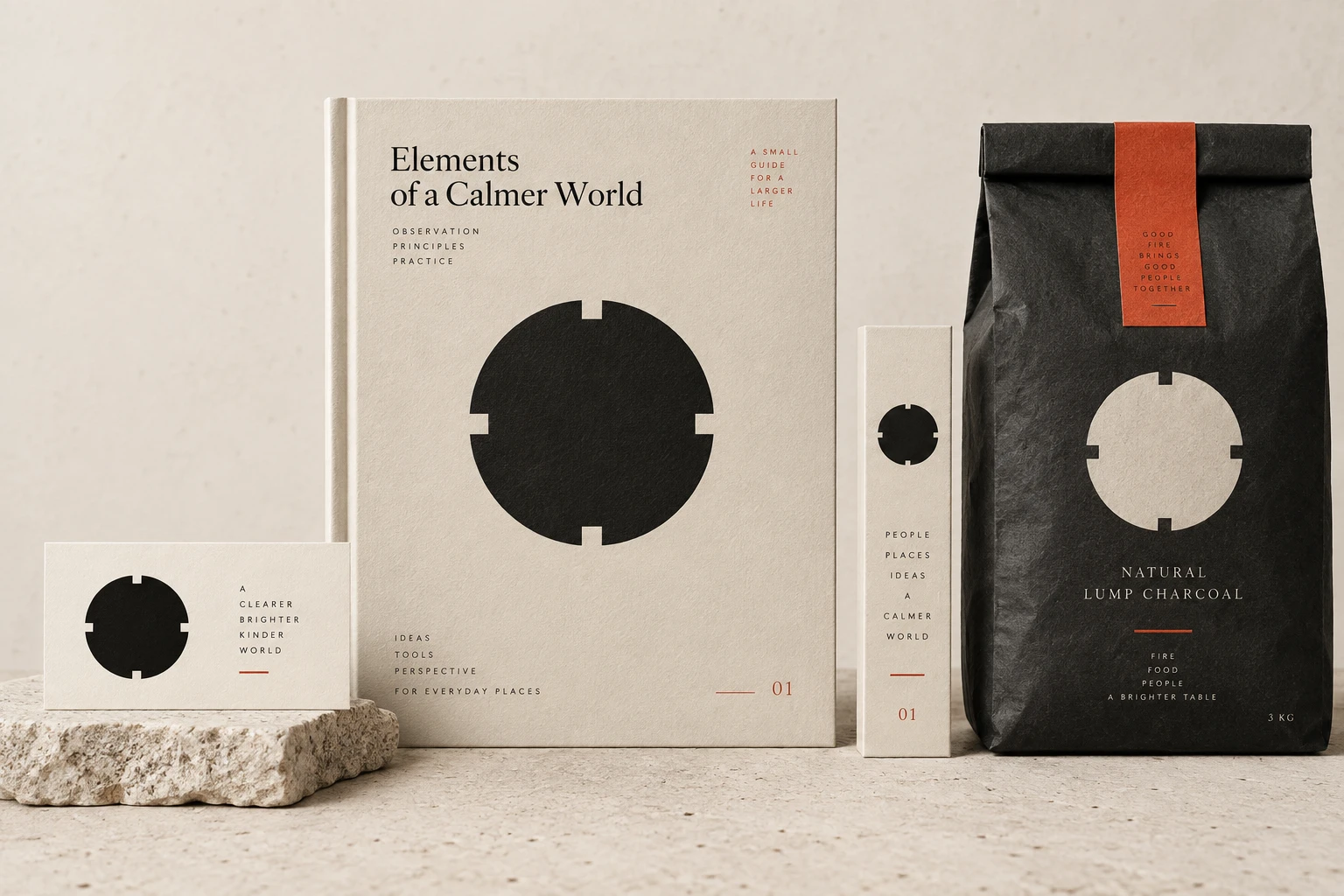
The idea
An identity benefits from features people can remember: a shape, type treatment, colour relationship or image approach.
Review the surrounding category to understand where conventions help recognition and where the work risks becoming interchangeable.
Choose distinctions that fit the organisation and can be used consistently. Being different is not sufficient if the result is hard to read or unsuitable for its context. Test recognition with the intended audience rather than assuming that the design team's preference predicts familiarity.
How to see it
Terms used in this lesson
The parts
- Distinctive feature
- A recurring element that helps recognition.
- Category
- The comparable organisations or products surrounding the identity.
- Recognition
- The ability to identify something from previous exposure.
In practice
- Review the surrounding category
- Repeat useful identity features consistently
- Test recognition with the intended audience
Avoid
- Difference that reduces legibility
- Assuming preference predicts recognition
- Treating a colour as uniquely owned without evidence
The test
Show several applications alongside comparable organisations. Which features help people recognise yours, and do those features remain useful in smaller or simpler formats?
Learn this
- TasteNovelty Budget
- TasteTimelessness
- IdentityCover-Up Test
- ProductIllustration Restraint
Reviewed against all forty, on your product.
The audit is the cheapest thing we sell, and it regularly concludes that you do not need the project you came for.