
Provenance · 01 of 04
Keep a useful record of references
Name the work that informed a decision and explain what you learned from it.
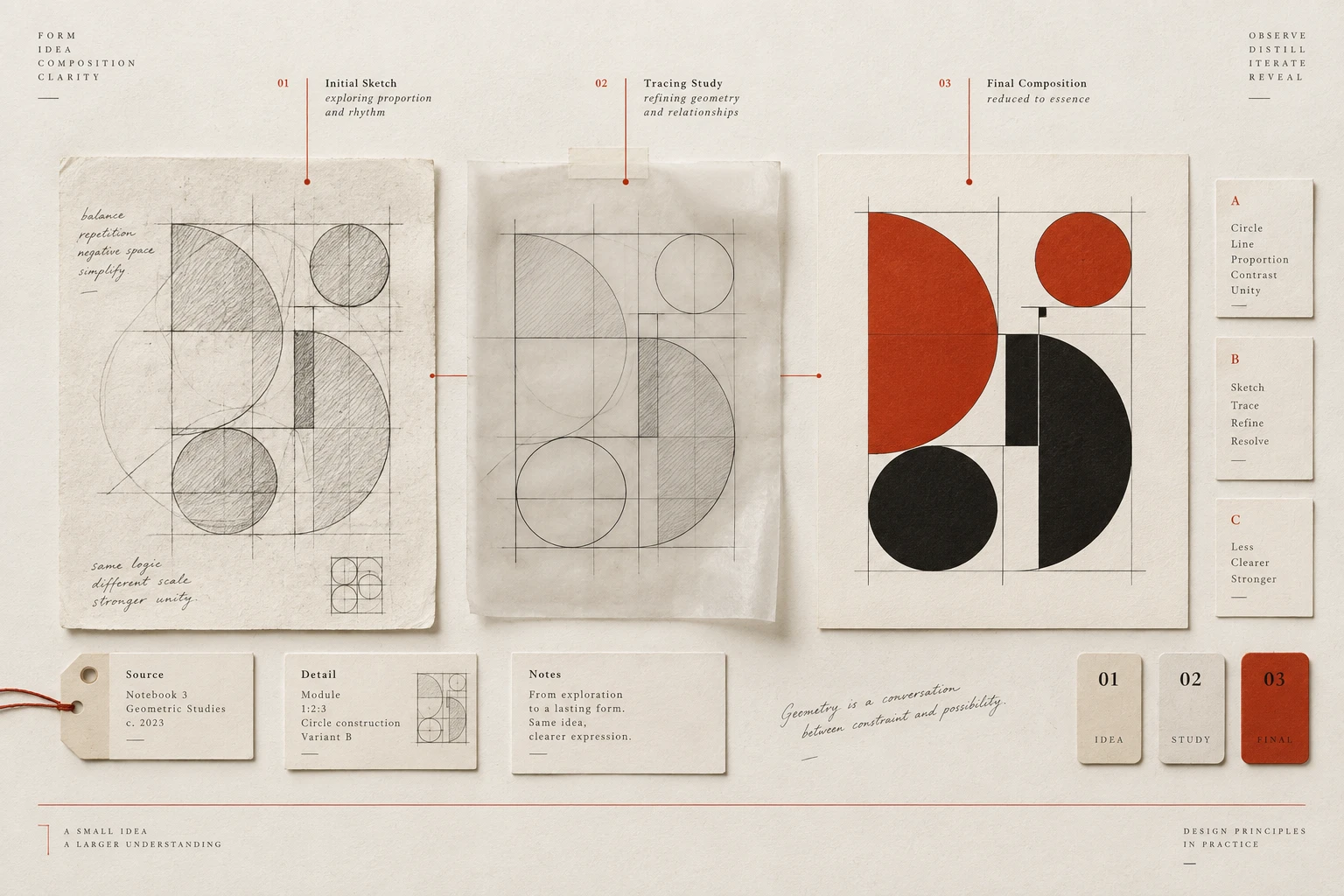
The idea
A reference list helps others understand the research behind a project.
Record the original maker or publisher, the work, a link and the aspect that informed your thinking. Distinguish a direct reference from a broad tradition or a competitor comparison.
Keep this record with the project and include relevant references in the handover. Credit is valuable, but it does not itself grant permission to reuse an asset. Track reuse permissions separately where needed, and do not present a source as evidence for a claim you have not checked.
How to see it
Terms used in this lesson
The parts
- Reference
- The work consulted during research.
- Attribution
- Credit identifying a maker or source.
- Permission
- The basis on which an asset may be reused, separate from the credit.
In practice
- Record the original maker and work
- Explain the relevant design idea
- Keep permissions separate from credits
Avoid
- Crediting an aggregator as the maker
- Losing the references during handover
- Treating a credit as permission to reuse
The test
Choose a major design decision. Can another person find its reference and understand which idea informed the work?
Learn this
- TasteHow to Get References
- TasteTaste Is Trained
- PackagingNamed Stock Before Finish
Reviewed against all forty, on your product.
The audit is the cheapest thing we sell, and it regularly concludes that you do not need the project you came for.