
Provenance · 02 of 04
Learn from the reasoning behind a reference
Understand the problem a reference solves before applying its approach.
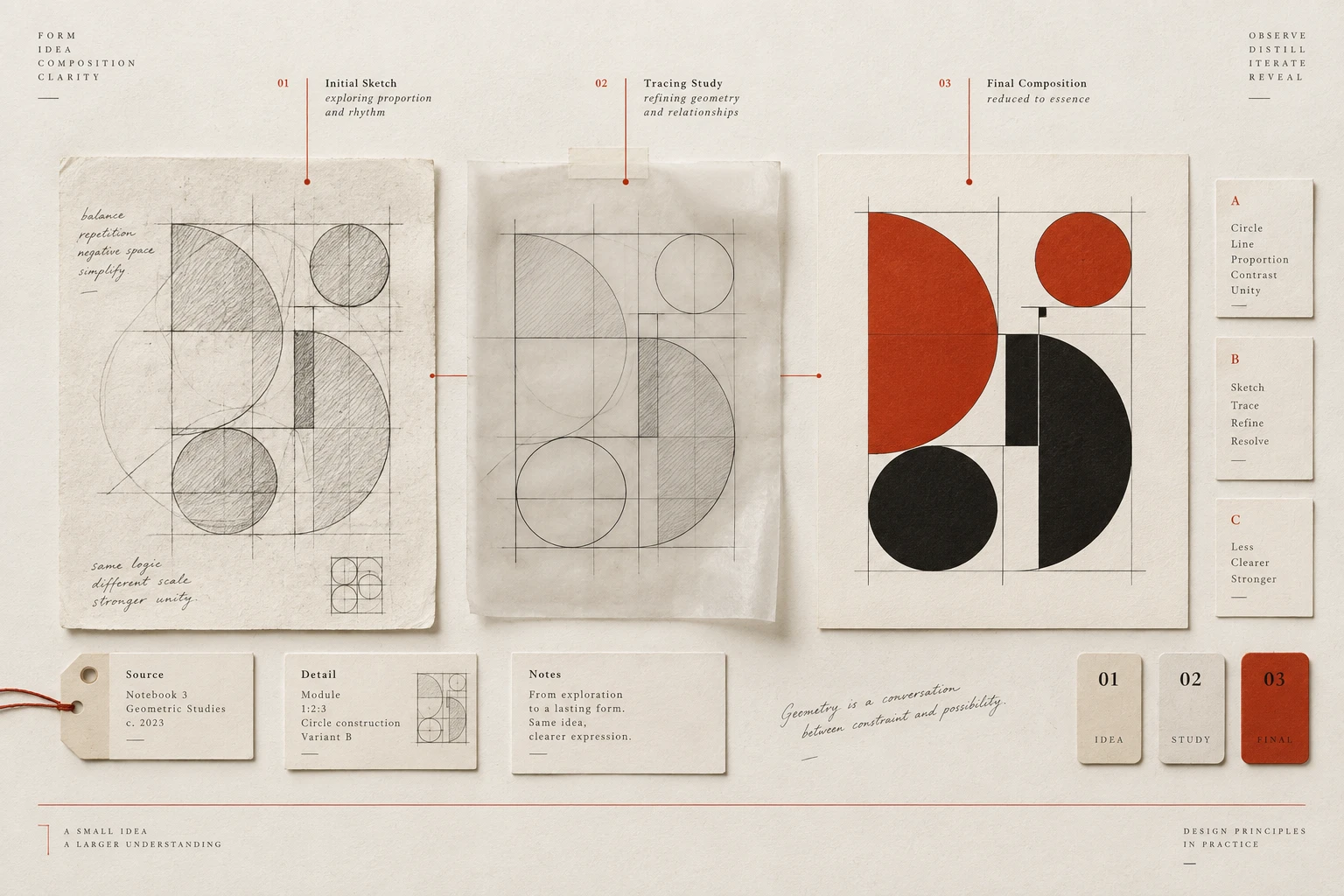
The idea
A useful reference reveals a relationship between a problem and a design decision.
A tight grid might support comparison; a large image might establish context. Identify that relationship instead of copying the visible treatment without its purpose.
Develop alternatives against the current brief, audience and constraints. Compare the result with the reference to identify unnecessary dependence, while recognising that shared conventions are common. If an actual asset is being reused, handle its permission and attribution explicitly rather than treating a visual change as a substitute.
How to see it
Terms used in this lesson
The parts
- Constraint
- A requirement or limitation shaping the solution.
- Deconstruction
- Examining how a reference responds to its problem.
- Adaptation
- Developing an approach for a different context.
In practice
- Describe the problem the reference solves
- Explore alternatives against the current brief
- Check rights for any reused assets
Avoid
- Copying a surface without understanding its purpose
- Changing colours and calling the result independent
- Using a thumbnail comparison as a legal test
The test
Explain the borrowed idea without showing the reference. Can you show how your design responds to this project's particular content and constraints?
Learn this
Reviewed against all forty, on your product.
The audit is the cheapest thing we sell, and it regularly concludes that you do not need the project you came for.